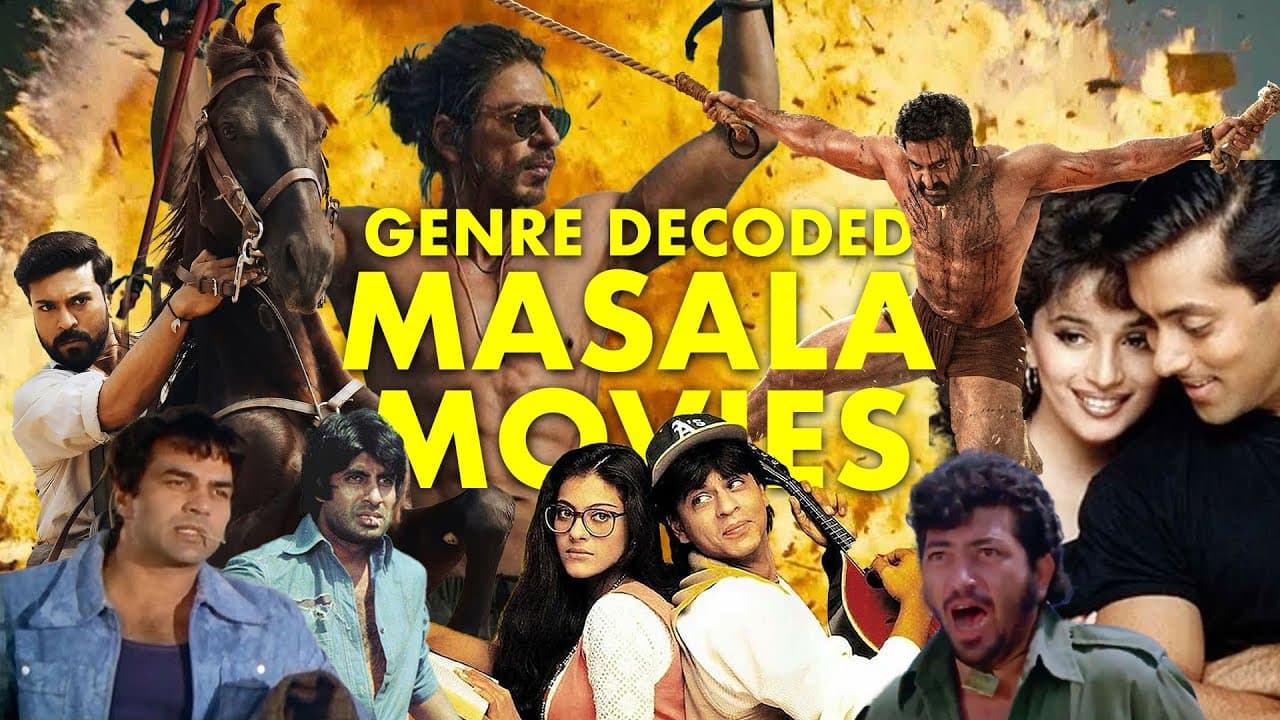
What is a 'masala film', and why does the label keep getting it wrong?
The term is used as a shorthand for excess. Its actual history is more specific, more deliberate, and considerably more interesting than the way it gets deployed in reviews.
If you have read any English-language writing about Hindi cinema, you have encountered the word masala. It is usually doing one of two jobs: affectionate shorthand, or a polite way of saying the film was not serious.
Neither use has much to do with what the term originally described.
The original meaning
Masala cinema names a specific structural approach that consolidated in the 1970s: a single film deliberately containing action, romance, comedy, melodrama and musical sequences, arranged so that a heterogeneous audience each finds something addressed to them. The word is a spice-blend metaphor and it is precise, the point is the proportions, not the quantity.
This was a commercial architecture, not an accident of taste. Cinema halls served audiences with radically different expectations in the same room at the same screening. A film that satisfied only one of those groups left money on the floor.
Where the label goes wrong
The modern usage flattens all of this into "loud". A film gets called masala because it has a fight scene and a song, regardless of whether the tonal shifts are controlled or the register changes are earned. Used this way the word describes a texture rather than a structure, and it stops carrying information.
The more useful question about any film in this mode is not whether it mixes registers but whether it manages the transitions. A well-built masala film moves between comedy and violence without the audience experiencing whiplash, because the tonal architecture was designed. A badly built one lurches.
Why this matters for how you watch
Applying a realist critical framework to a film operating in this mode produces a predictable result, the film fails a test it was never taking. The reverse is equally unhelpful. Knowing which set of rules a film has signed up to is most of the work of watching it well.
Spotted an error? We publish corrections openly — email editor@thebollywoodwave.com and read our corrections policy.